

BluePRO 500 GSM Edgeless Microfiber Towels: The Last Detailing Towel You'll Need to Buy
There's a specific kind of heartbreak that only people who wash their own cars understand. You've spent two hours on the paint. Washed it, dried it, laid down a coat of wax. Then you grab a towel to buff it off and, a few passes later, you catch the light just right and see it: a faint little swirl that wasn't there before. The towel did that. Not the wax, not the wash. The towel.
I've been there more times than I'd like to admit, and most of those times the culprit was a towel that looked perfectly fine. That's the thing about microfiber. Cheap towels and good towels can look nearly identical folded on a shelf. The difference shows up on your clear coat.
So let's talk about the BluePRO 500 GSM Edgeless Tagless Microfiber Towels, because they fix the two problems that cause most of that heartbreak.
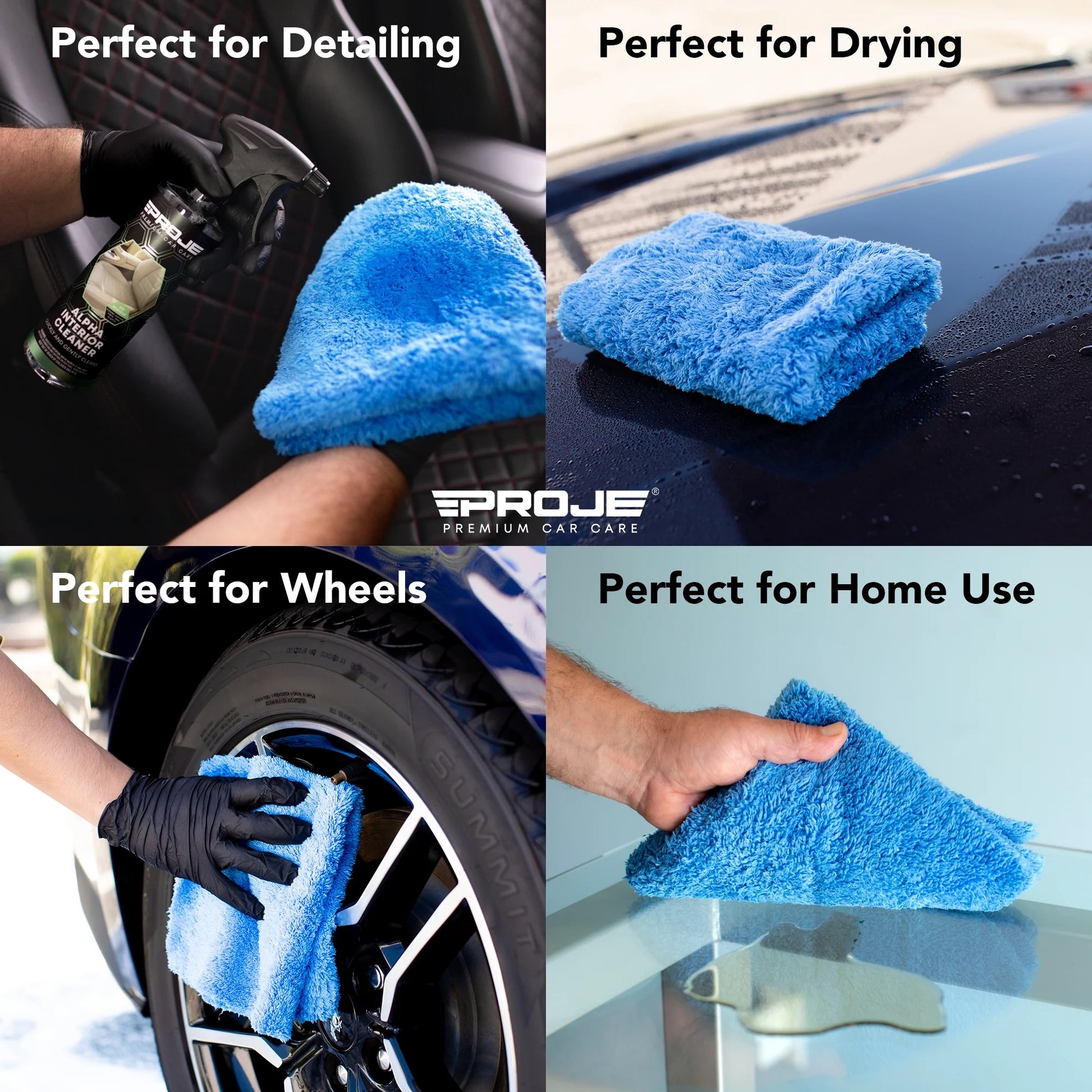
First, the obvious question: what does 500 GSM actually mean?
GSM stands for grams per square meter, and it's basically a measure of how much fiber is packed into the towel. A bargain-bin microfiber towel from a big box store might sit around 250 to 300 GSM. It feels thin, it dries out fast, and it doesn't have much room to hold onto residue.
At 500 GSM, you're in a different league. The BluePRO towels are noticeably plush in the hand. There's a real pile to them, and that pile is what matters. When you're wiping off wax, sealant, or the haze left behind from a polishing compound, that residue needs somewhere to go. A dense towel pulls it up into the fibers and keeps it there. A thin towel just pushes it around, and pushed-around grit is what leaves marks.
Each towel is 16 by 16 inches, which is the size most detailers reach for without thinking about it. Big enough to cover a hood panel without constantly refolding, small enough to stay manageable when it's loaded up with product.
Edgeless and tagless: the part people underrate
Here's a detail I wish someone had told me years ago. On a lot of microfiber towels, the towel itself is soft, but the edges are stitched with a stiffer polyester binding. That binding is harder than your clear coat. Drag it across paint enough times and it will leave fine scratches, especially on darker colors where every imperfection shows.
The BluePRO towels don't have that binding. The edges are cut clean and left unbound, so there's no hard seam anywhere on the towel. Same story with the tag. No sewn-in label with sharp corners waiting to snag on trim or scuff a piece of chrome. The whole towel is the same soft surface from corner to corner.
That matters most when you're working on the parts of a car that scratch easily: black paint, piano black interior trim, glossy plastic around the infotainment screen, polished metal. Those surfaces punish mistakes. An edgeless towel takes one of the most common mistakes off the table.
Where these towels earn their keep
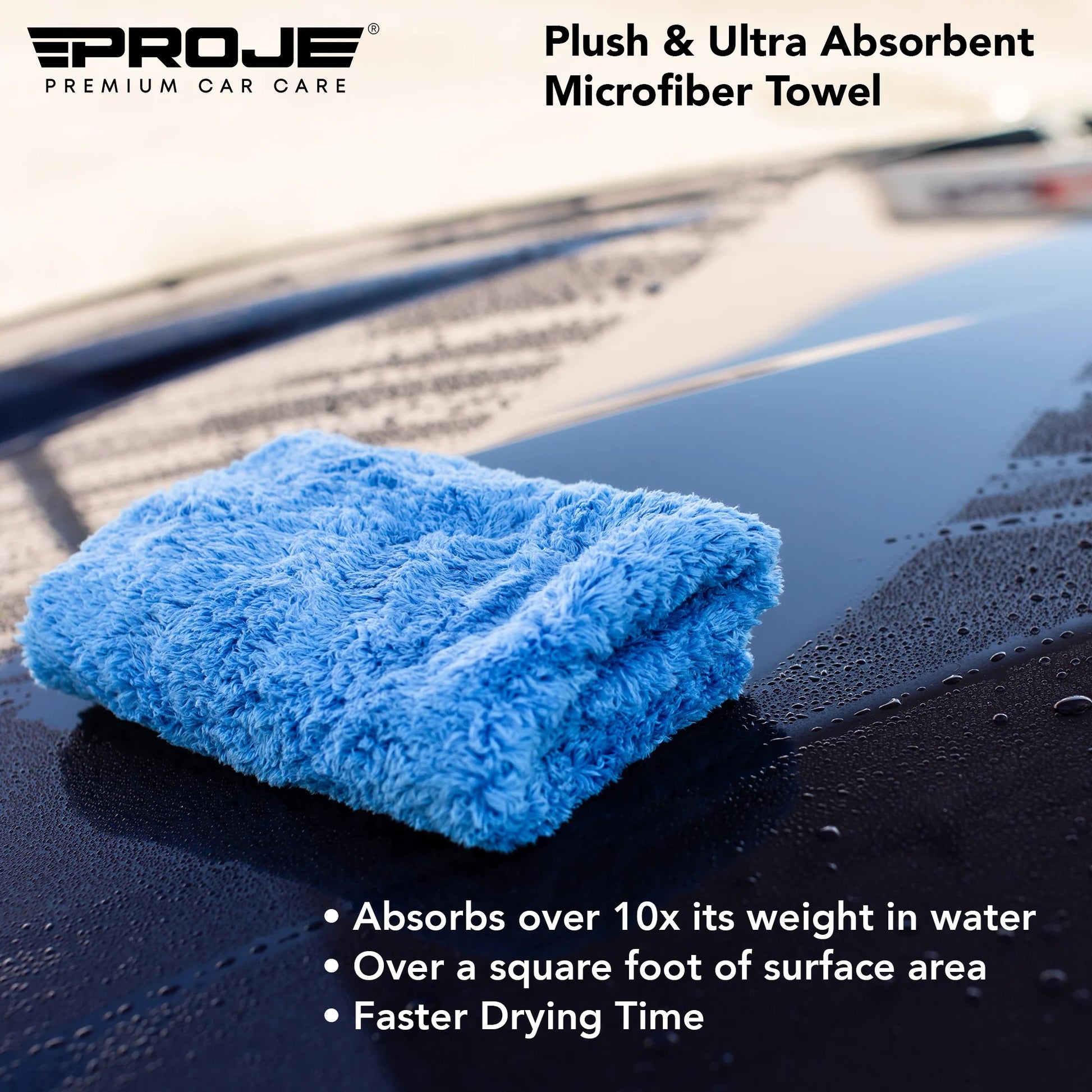
The BluePRO towels are made by Proje Products, a company that builds for detailers, and you can tell from how the towels are meant to be used. These aren't general-purpose rags. They're for the finishing end of the job, the steps where the surface is already clean and your goal is to not undo that.
A few places they shine:
Wax and sealant removal. This is the classic job. Let the product haze, then buff it off with a dry BluePRO. The plush pile grabs the residue without needing much pressure, which is exactly what you want. Pressure is the enemy here.
Ceramic coating leveling. If you've ever applied a ceramic coating, you know the panic of watching it start to flash and wondering if your towel is going to leave high spots. A soft, lint-free towel is non-negotiable for this. Lint stuck in a curing coating is not a fun thing to fix.
Quick detailer and spray wax. Mist, wipe, flip to a clean side, buff. These towels are thick enough that you can work through several sides of a folded towel before it stops pulling product cleanly.
Glass. Lint-free is the whole game on glass. A towel that sheds even a little will leave you chasing fuzz across the windshield.
Interiors. Dashboards, door panels, screens. Anything glossy that you don't want to haze.
A quick word on the color
They're blue, and that's not just an aesthetic choice. If you detail regularly, you probably already color-code your towels so the one that touched wheel cleaner never goes near your paint. Having a dedicated blue set for finishing work makes it easy to keep them separate from your grubbier towels. Once a towel has done a dirty job, it's a dirty towel forever as far as your paint is concerned.
Taking care of them so they take care of you
Microfiber only works if you wash it right, and this is where a lot of people accidentally ruin good towels. A few rules that keep the BluePRO towels performing:
Wash them separately from cotton. Cotton sheds lint, and microfiber grabs lint like it's being paid to. Use a mild detergent, skip the fabric softener entirely (it coats the fibers and kills their absorbency), and dry on low heat or hang them. High heat can melt the fine fibers and leave them feeling slick and useless.
Do that, and these towels will go through hundreds of wash cycles. A six-pack at $18 works out to three dollars a towel, and each one will outlast a whole stack of cheap ones you'd have thrown out anyway.
Who should grab a pack
If you're a weekend washer who's tired of guessing whether your towels are the reason your black car never looks quite right, this is an easy upgrade. If you're a pro or a serious enthusiast, you already know what 500 GSM edgeless means, and you know six for $18 is a good deal.
And if you just picked up a new car and want to keep that showroom finish for more than a month, start here. Good towels are the cheapest insurance policy your paint will ever have.
You can find the BluePRO 500 GSM Edgeless Tagless Microfiber Towels 6-pack right here at Clean My Tech.
